

Security & Blockchain Hacks
Dispatch from Damascus: Church assault exhibits transition’s fragility


![[Security & Blockchain Hacks]](https://blocktrend.online/wp-content/uploads/2025/06/Dispatch-from-Damascus-Church-attack-shows-transitions-fragility.jpg)
Dispatch from Damascus: Church assault exhibits transition’s fragility
Uncover insights within the Web3 house. This article dives into: “Dispatch from Damascus: Church attack shows transition’s fragility”.
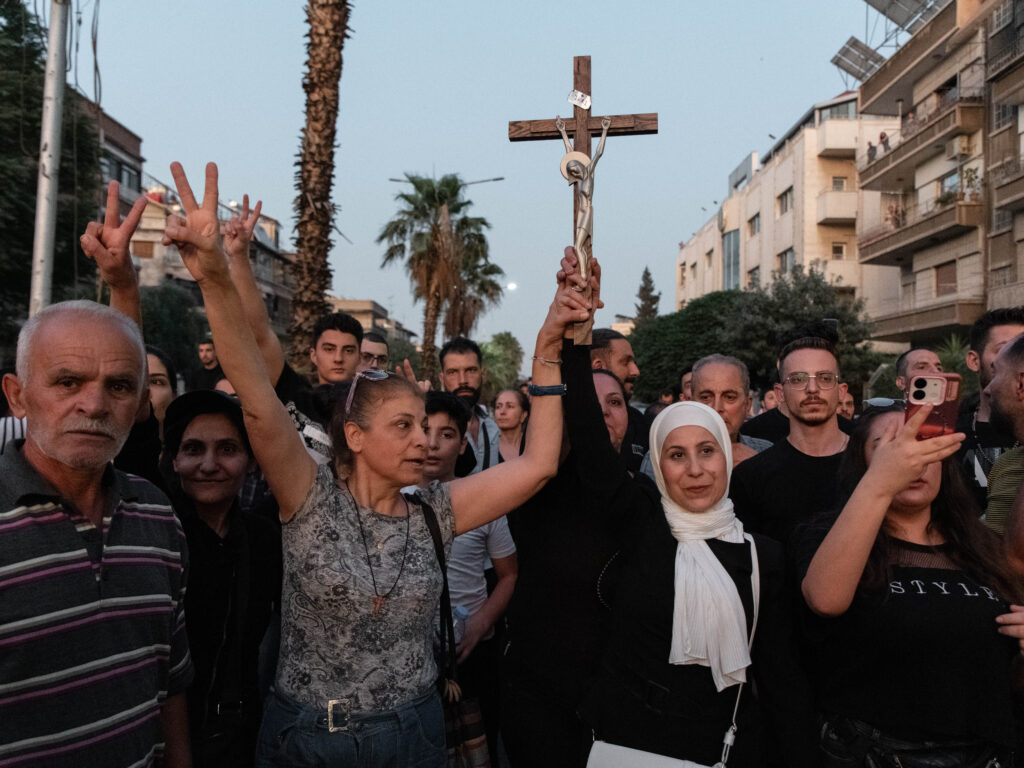
DAMASCUS—I used to be en route from Damascus to Beirut on June 22 when the information started lighting up my cellphone—messages from pals, notifications, headlines. A bomb had exploded at Mar Elias Church in Damascus throughout Sunday liturgy, killing twenty-five and injuring dozens extra.
The second I noticed the goal, I knew this wasn’t only a tragic safety breach. It was one thing extra deliberate, a calculated political message. The symbolic focusing on of a minority place of worship suggests strategic intent: to fracture communal belief, to problem the legitimacy of the transitional authorities, and to sign that no neighborhood is off limits. The sequence of current assaults in opposition to Alawites, then Druze, and now Christians reveals a disturbing pattern in Syria—and this assault on a Christian church marks an escalation. The perpetrators are sending a message, not solely to non secular minorities but additionally to Syria’s cosmopolitan and concrete communities: everyone seems to be weak.
The assault raises pressing questions on who controls safety in a post-Bashar al-Assad Syria, and whether or not any neighborhood can depend on safety beneath a brand new authorities led by President Ahmed al-Sharaa, previously of militant opposition group Hayat Tahrir al-Sham (HTS). For the United States and its allies, it’s a warning concerning the fragility of the transition, and a name to reassess how to assist stability.
The assault and its fast impression
The explosion represents the primary mass-casualty terrorist assault within the capital for the reason that fall of the Assad regime. The Syrian Interior Ministry attributed the assault to Islamic State sleeper cells. While this may increasingly show true, many observers questioned the velocity of this conclusion, suggesting that both the assault obtained inside facilitation or {that a} rush to assign blame masks deeper insecurity.
The Interior Ministry additionally claimed that authorities captured a second attacker who was allegedly en path to bomb a Shiite shrine in Sayyida Zeinab and thwarted a 3rd operation focusing on a crowded civilian space. These experiences, if correct, verify that the church assault was a part of a broader plot focusing on each spiritual minorities and civilians. The Ministry added that the church bomber was not Syrian—however offered no additional particulars.
The focusing on of a Christian website, with none claimed justification or provocation, is a stark departure from earlier patterns. Earlier assaults had been framed, nevertheless cynically, round perceived offenses or political allegiances. The bombing at Mar Elias lacked even that pretext. It was meant to ship a broader sign: Syria’s minorities, no matter their political alignment, stay weak. Moreover, it highlights a chilling risk that the capital, as soon as thought of essentially the most safe a part of the nation, might not supply safety from uneven violence.
SIGN UP FOR THIS WEEK IN THE MIDEAST NEWSLETTER
Questions stay concerning the operational nature of the bombing: Was this an remoted sleeper cell assault? Did it obtain exterior facilitation, or was it enabled, knowingly or not, by parts inside Syria’s fragmented safety structure? In Damascus, some observers have quietly raised considerations that the attackers might have handed via compromised checkpoints, or obtained oblique assist from native actors with divided loyalties or restricted oversight. These aren’t but confirmed claims, however they mirror a broader nervousness throughout the transitional authorities about infiltration, coordination gaps, and the bounds of their very own management.
Terrorist assaults pose challenges even to essentially the most superior and succesful governments, particularly in an period of decentralized threats and lone-wolf actors. Syria’s establishments, nonetheless reeling from years of battle, face an much more daunting process.
Public sentiment and minority considerations
The assault’s fast aftermath noticed an outpouring of grief and solidarity from throughout the nation, but additionally a palpable rise in concern.
Christian communities, already diminished by years of conflict and emigration, now face renewed nervousness about their future in Syria. They aren’t alone. The assault has raised alarm amongst different spiritual minorities, as effectively. Alawite communities in villages alongside the Syrian coast have been lately attacked by armed militants and rogue teams. The violence adopted a coordinated assault by remnants of the Assad regime in these areas in opposition to authorities safety forces, sparking a wave of sectarian killings and retaliatory violence. Islamist armed teams raided Druze cities in southern Syria, accusing residents of blasphemy and spiritual violations. Now, Christians are focused with out trigger. The trajectory suggests a calculated effort to fracture social cohesion.
Beyond spiritual identities, city Sunnis and secular Syrians in cosmopolitan facilities additionally really feel uncovered. Radical actors, just like the Islamic State in Iraq and al-Sham (ISIS), view these communities as equally apostate or impure. There is rising concern that markets, Shia mosques, and different civic gathering locations could also be subsequent. This is not only a disaster for minorities, it’s a menace to Syria’s pluralistic social cloth.
Security sector gaps and authorities response
The bombing underscores the continuing disarray in Syria’s safety structure. Assad’s infamous safety equipment, deeply related to torture, repression, and systemic abuse, was rightly ousted after years of violent battle. However, no prepared power was in place to fill the void. What emerged as an alternative is a fragmented system composed of native militias, advert hoc safety our bodies, and under-resourced police items. In Damascus, visitors police have lately returned, however many police stations are headed by inexperienced figures, some reportedly former HTS clerics. In my conversations with residents in Damascus, many described these officers typically as well-intentioned however untrained and ineffective.
Al-Sharaa’s interim authorities has struggled to reassure the general public that it may present safety and stop additional assaults. Critics famous the vagueness of his preliminary assertion, and a few questioned how rapidly officers pointed to ISIS because the perpetrator.
Al-Sharaa’s assertion provided condolences, however little readability.
“We extend our deepest condolences and sincere sympathy to the families of those who perished in this criminal bombing that affected the entire Syrian people,” he stated, emphasizing the necessity for unity between authorities and residents in opposition to threats to nationwide safety.
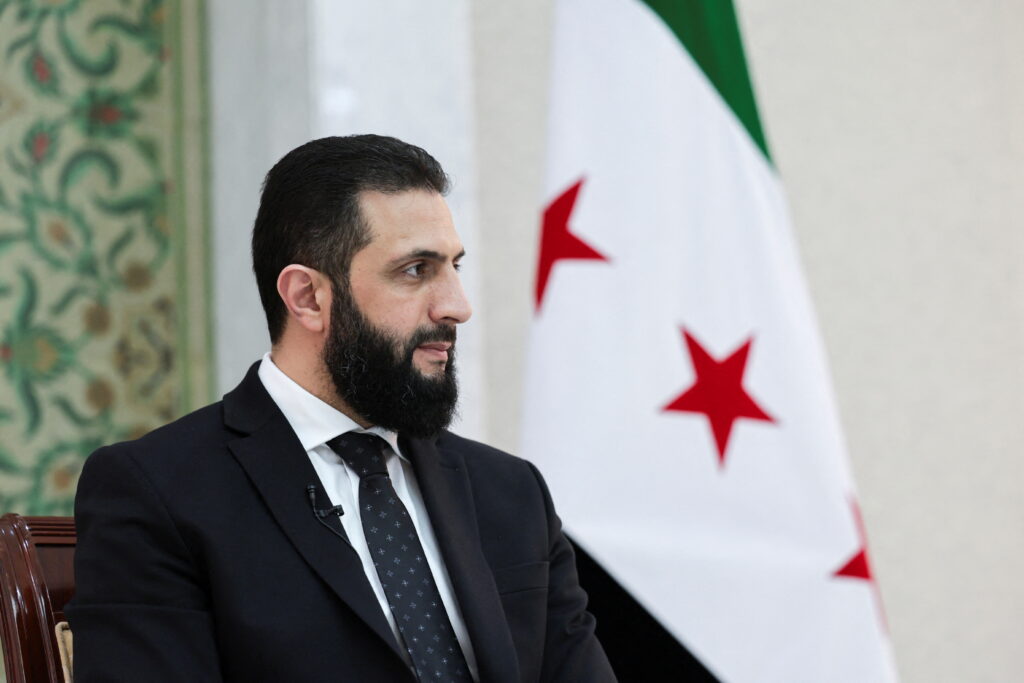

He pledged to mobilize all safety forces to deliver the perpetrators to justice. Yet notably, he didn’t point out Christians nor title the church that had been attacked. While Damascus now exhibits extra seen patrols, many cities and cities stay dangerously under-secured. This bombing, coming simply months after failed safety of Druze communities in Jaramana, means that communities across the capital are not a assured secure zone.
The assault additionally deepens considerations amongst Kurdish and different communities who’re already skeptical of counting on Damascus for defense. The query of who gives safety is now central to Syria’s evolving social contract. As the state struggles to challenge competence, native communities might more and more search various preparations, additional fragmenting the nationwide panorama.
The function of international fighters and fragmented armed teams
A delicate however important facet of Syria’s present safety actuality is the mixing of international fighters into newly shaped nationwide items. Fighters from Uighur, Dagestani, and different transnational networks have been introduced in throughout the battle years and now kind a part of the pro-government order. But their restricted ties to native communities, linguistic and cultural disconnects, and controversial pasts have made them a supply of stress.
Though there is no such thing as a confirmed hyperlink between international fighters and the Mar Elias bombing, current public debates in Syria questioned their future function. Integrating such actors into nationwide constructions with out rigorous vetting, coaching, and accountability mechanisms dangers undermining each legitimacy and effectiveness. According to Syria’s Interior Ministry, the captured cell chief, Mohammad Abdelillah al-Jumaili, had ties to the al-Hol camp in northeastern Syria, the place radicalized fighters have been recruited for assaults.
Policymakers in Washington ought to take be aware: This is a textbook case of the safety dilemma in post-conflict transitions.
The bombing additionally underscored deeper challenges associated to non secular discourse in Syria and the necessity for spiritual institutional reform. What stood out to me is that the Ministry of Endowments, which oversees mosques and spiritual messaging, hasn’t been taking part in an lively function or adapting to the second. During my time in Damascus and Homs, I noticed billboards from the ministry promoting Hajj prayers and spiritual programming, however nothing that spoke to unity, peace, or social solidarity. There is a urgent want for spiritual establishments to play a constructive function in social reconciliation and counter-radicalization. Reforming the spiritual institution so it promotes pluralism somewhat than silence or sectarianism needs to be a part of any long-term stabilization plan.
Regional and worldwide stakes
The worldwide response to the church bombing was swift—together with condemnations from the Gulf states, European Union, United States, and Turkey. But condemnation alone is inadequate. The incident poses strategic questions: how can exterior actors assist Syria’s stabilization with out inadvertently empowering abusive or unaccountable constructions? Can exterior assist goal inclusive governance, neighborhood policing, and deradicalization efforts with out changing into enmeshed in home rivalries?
For Washington, the assault is a reminder of the unfinished work in Syria. Over the final decade, the US mission in Syria centered on countering ISIS and offering humanitarian assist. The focus should now increase to a broader agenda: supporting institution-building, safety sector reform, and inclusive political transition. This shift is particularly well timed given US President Donald Trump’s lively recalibration of Washington’s Syria coverage, together with new directives that assist engagement with transitional actors and coordination on safety issues. US officers have acknowledged working with Syrian authorities to trace extremist networks and monitor the mixing of international fighters into new nationwide items, an implicit recognition that safety coordination is already underway. Engagement with transitional actors, nevertheless messy or imperfect, needs to be guided by conditionality, partnership, and sustained assist.
The bombing at Mar Elias Church is greater than an remoted tragedy. It is a strategic sign that Syria’s transition stays weak to sabotage. Without credible, skilled safety forces, spiritual reform, and significant inclusion of minorities and concrete constituencies, Syria dangers sliding into a brand new cycle of concern and fragmentation.
Policymakers in Washington and past should act on this warning. Supporting a safe, pluralistic Syria means serving to to construct the establishments that Assad destroyed, however with out replicating his repressive legacy. This isn’t solely a matter of ethical readability. It is a strategic crucial.
Ibrahim al-Assil is a resident senior fellow for the Syria Project within the Atlantic Council’s Middle East Programs. He can also be a professorial lecturer at George Washington University’s Department of Political Science, the place he teaches programs on comparative politics and great-power competitors.
Further studying
Image: A procession of Syrians marches via the streets of Damascus following the commemorations organized within the Mar Elias church the day after a suicide bombing killed 25 individuals and wounded greater than 60 on Sunday June 22. Demonstrators marched ahead chanting slogans similar to “Mother of martyrs, we are your sons” and “Christians, hold your heads high”. According to the Syrian authorities, the perpetrator of the assault was a member of Daech. President Ahmed al-Sharaa declared three days of nationwide mourning. Damascus, Syria, June 22, 2025.
Un cortege de syriens marche dans les rues de Damas a la suite des commemorations organisees dans l’eglise Mar Elias au lendemain d’un attentat suicide ayant fait 25 morts et plus de 60 blesses, le dimanche 22 juin, dans l’eglise Mar Elias. Les manifestants avancent en scandant differents slogans “Mere des martyrs, nous sommes tes fils” ou encore “chretiens gardez la tete haute”. Selon les autorites syriennes, l’auteur de l’attaque serait un membre de Daech. Le president Ahmed al-Sharaa a decrete trois jours de deuil nationwide. Damas, Syrie, 22 juin 2025.
Related Articles
Discover important updates within the Web3 house. This article covers: “Dispatch from Damascus: Church attack shows transition’s fragility”.
- Blockchain & Crypto Trends — keep forward with international adoption, tech shifts & improvements
- DeFi & Web3 Innovations — discover the way forward for finance and web decentralization
- NFT, Gaming & Metaverse — dive into digital economies and digital asset revolutions
- AI & Blockchain Integration — uncover how AI enhances trustless blockchain ecosystems
- Regulations & Global Tech — observe legal guidelines, compliance, and international tech coverage impacts
- Tokenomics & Coin Analysis — decode challenge worth, utility, and investor metrics
- Security & Blockchain Hacks — shield your crypto with menace and exploit insights
- Mining & Validator Ecosystem — study staking, block rewards, and consensus
More from the SFB Ecosystem
- Explore BlockTrend for skilled takes on blockchain tendencies & developments
- Visit CryptoCoil for dwell market knowledge, altcoin insights & sentiment monitoring
- Check i-News for contemporary international crypto headlines & breaking tales
- Claim & earn with trusted drops on i-Coin — your faucet & incomes hub
- Learn crypto the sensible method on i-VIP — sensible tutorials, guides & ideas for newcomers
- Discover curated crypto insights on SFBNEWS — automated crypto updates & skilled curation
[ad_3]
Original Source
This article is customized from www.atlanticcouncil.org. We’ve restructured and rewritten the content material for a broader viewers with improved readability and search engine marketing formatting.
Stay Updated with BLOCKTREND
Dive deeper on BLOCKTREND for day by day crypto updates.


![[Security & Blockchain Hacks]](https://blocktrend.online/wp-content/uploads/2025/08/Criminals-are-%E2%80%98vibe-hacking-with-AI-at-unprecedented-levels-Anthropic.png)


![[Security & Blockchain Hacks]](https://blocktrend.online/wp-content/uploads/2025/08/Coinbase-tightens-workforce-security-after-North-Korea-remote-worker-threats.jpg)


![[Mining & Validator Ecosystem]](https://blocktrend.online/wp-content/uploads/2025/08/51-attack-on-Monero-prompts-proposal-to-overhaul-consensus-mechanism.png)


![[Security & Blockchain Hacks]](https://blocktrend.online/wp-content/uploads/2025/08/Qubic-Targets-Dogecoin-After-Community-Vote-to-Launch-Next-51.png)


![[Security & Blockchain Hacks]](https://blocktrend.online/wp-content/uploads/2025/08/Dogecoin-targeted-by-Qubic-group-after-51-attack-on-Monero.jpg)


![[Security & Blockchain Hacks]](https://blocktrend.online/wp-content/uploads/2025/08/Kraken-Halts-Monero-Deposits-After-Qubics-Disputed-51-Attack-Claim.png)

![[NFT, Gaming & Metaverses]](https://blocktrend.online/wp-content/uploads/2025/08/Ethereum-is-very-much-%E2%80%98the-Wall-Street-token-VanEck-CEO-400x240.jpeg)

![[NFT, Gaming & Metaverses]](https://blocktrend.online/wp-content/uploads/2025/08/Ethereum-is-very-much-%E2%80%98the-Wall-Street-token-VanEck-CEO-80x80.jpeg)
![[Blockchain & Crypto Trends]](https://blocktrend.online/wp-content/uploads/2025/08/XRP-Emergency-Price-Break-Bitcoin-BTC-Losing-100000-If-This-400x240.jpg)
![[Blockchain & Crypto Trends]](https://blocktrend.online/wp-content/uploads/2025/08/XRP-Emergency-Price-Break-Bitcoin-BTC-Losing-100000-If-This-80x80.jpg)
![[AI & Blockchain Integration]](https://blocktrend.online/wp-content/uploads/2025/08/Nvidia-reports-record-sales-as-the-AI-boom-continues-400x240.jpg)
![[AI & Blockchain Integration]](https://blocktrend.online/wp-content/uploads/2025/08/Nvidia-reports-record-sales-as-the-AI-boom-continues-80x80.jpg)
![[DeFi & Web3 Innovations]](https://blocktrend.online/wp-content/uploads/2025/08/Alchemy-Pay-plugs-fiat-ramp-into-Boyaas-Web3-poker-game.w-400x240.webp)
![[DeFi & Web3 Innovations]](https://blocktrend.online/wp-content/uploads/2025/08/Alchemy-Pay-plugs-fiat-ramp-into-Boyaas-Web3-poker-game.w-80x80.webp)

![[Mining & Validator Ecosystem]](https://blocktrend.online/wp-content/uploads/2025/08/REX-Osprey-files-for-BNB-staking-ETF-as-monthly-inflows-pick.png)

![[Tokenomics & Coin Analysis]](https://blocktrend.online/wp-content/uploads/2025/08/Investors-Flock-To-XYZVerse-XYZ-For-Promising-Potential-While-ONDO-400x240.jpg)
![[Tokenomics & Coin Analysis]](https://blocktrend.online/wp-content/uploads/2025/08/Investors-Flock-To-XYZVerse-XYZ-For-Promising-Potential-While-ONDO-80x80.jpg)

![[Tokenomics & Coin Analysis]](https://blocktrend.online/wp-content/uploads/2025/08/Pi-Coins-Charts-Hint-at-a-Turnaround%E2%80%94Heres-Why-a-40.png)

![[Security & Blockchain Hacks]](https://blocktrend.online/wp-content/uploads/2025/08/Anthropic-Cybersecurity-Team-Warns-%E2%80%98Agentic-AI-Has-Been-Weaponized.png)
![[AI & Blockchain Integration]](https://blocktrend.online/wp-content/uploads/2025/08/Swarm-Network-raises-13M-to-facilitate-decentralized-AI-400x240.jpeg)
![[AI & Blockchain Integration]](https://blocktrend.online/wp-content/uploads/2025/08/Swarm-Network-raises-13M-to-facilitate-decentralized-AI-80x80.jpeg)